What Is Lidar in a Robot Vacuum? What You Need to Know
How a Robot Vacuum Uses Laser Navigation
LiDAR, which stands for Light Detection and Ranging, is the same technology used in self-driving cars and atmospheric science. In a robot vacuum, it acts as the machine’s eyes. It helps the vacuum create a detailed map of your home so it can clean efficiently and avoid getting lost or stuck.
Think of it like the vacuum is playing a very advanced game of tag with laser beams. It fires out hundreds of thousands of invisible laser pulses per second. These pulses bounce off your furniture, walls, and other objects and travel back to a sensor on the vacuum. By measuring how long each pulse takes to return, the robot calculates precise distances. This happens so fast that the vacuum builds a 360-degree map of the room in real-time.
LiDAR vs. Other Navigation Technologies
You’ll mainly find two types of navigation in modern robot vacuums: LiDAR and camera-based systems (sometimes called vSLAM). Some older, budget models still use random bounce navigation, but that’s becoming less common.
Camera-based navigation works by taking thousands of pictures of your ceiling and walls to figure out where it is. It’s like the vacuum is looking up to find landmarks, much like ancient sailors used the stars. LiDAR, on the other hand, actively scans the room with lasers. This often results in more consistent performance, especially in low-light conditions.
Key Differences at a Glance
| Feature | LiDAR Navigation | Camera (vSLAM) Navigation |
|---|---|---|
| Light Dependency | Works in complete darkness | Needs some ambient light to see |
| Accuracy | Very high precision, down to the millimeter | Good, but can be slightly less precise |
| Map Detail | Creates highly detailed, accurate floor plans | Creates good maps, but may have minor inaccuracies |
| Speed of Mapping | Typically faster initial mapping | May take a few cycles to refine the map |
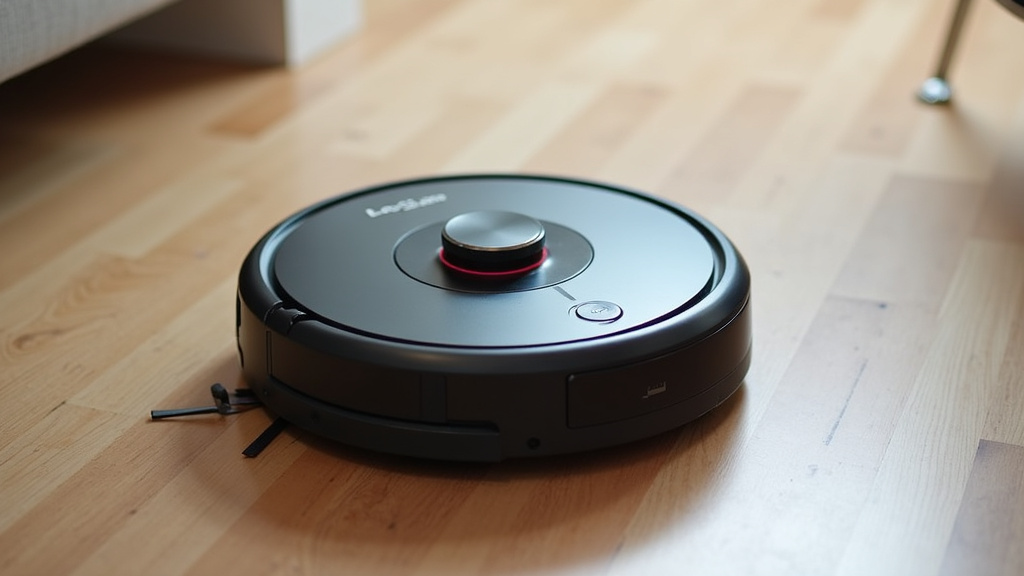
| Common Placement | Usually a raised turret on top of the vacuum | Integrated camera on the body of the vacuum |
The Big Benefits of a LiDAR Robot Vacuum
So, why does this laser tech matter for your cleaning? The advantages are pretty clear once you see it in action.
Systematic, Efficient Cleaning: Instead of bumping into walls and wandering aimlessly, a LiDAR vacuum plans logical, back-and-forth cleaning paths. It covers the entire floor space methodically, like a person mowing a lawn in neat rows. This means fewer missed spots and less time spent cleaning.
Incredibly Detailed Maps: The vacuum doesn’t just know it’s in the kitchen; it knows exactly where the kitchen island is and can navigate around its legs with precision. This data allows for powerful app features. You can draw no-go zones around a pet’s water bowl or set it to clean only the living room on a specific day.
Reliable in Any Lighting: Ever wanted the vacuum to run while you’re out for the evening or overnight? LiDAR works perfectly in the dark. It doesn’t rely on seeing your ceiling, so it performs consistently whether it’s bright noon or midnight.
Real-World Smart Features Enabled by LiDAR
- Multi-Floor Mapping: Many LiDAR models can save maps for several floors of your home. You can then tell it to “clean the upstairs” from the app, and it will automatically go to the correct area.
- Room Recognition: The vacuum often identifies different rooms (like bedroom, living room, kitchen) on its own. You can then assign custom cleaning schedules or suction power for each.
- Efficient Recharge & Resume: If the battery runs low during a large clean, a LiDAR vacuum knows exactly where it left off. It will return to its dock, recharge, and then resume cleaning from that exact spot.
Are There Any Downsides to LiDAR?
No technology is perfect, and it’s smart to know the limitations. LiDAR is excellent, but there are a few things to consider.
The Turret Height: The laser sensor is usually housed in a raised turret on top of the vacuum. This adds height, making some LiDAR robots slightly taller than camera-based models. They might have trouble sliding under very low furniture, like some sofas or beds with just a few inches of clearance.
Reflection and Transparent Objects: The laser can sometimes be confused by highly reflective surfaces like mirrored furniture or glass doors. It might also struggle to see clear glass or transparent plastic, potentially bumping into it. However, modern algorithms are getting much better at handling these edge cases.
Cost: Historically, LiDAR was a premium feature that significantly increased the price. While the cost has dropped dramatically, you’ll often still find LiDAR-equipped vacuums at a slightly higher price point than comparable models with basic navigation.
How to Choose a Robot Vacuum with LiDAR
Shopping for a LiDAR vacuum? Keep these factors in mind to make the best choice for your home.
1. Check the Manufacturer’s Specifications: Don’t just assume a vacuum has LiDAR. Look for terms like “LiDAR,” “LDS” (Laser Distance Sensor), or “laser navigation” in the product description. The physical turret on top is a telltale sign.
2. Consider Your Home’s Layout: Do you have lots of low-clearance furniture? Measure the space under your sofa and bed. If it’s very tight, a slimmer, camera-based model might actually be a better fit, even if it lacks LiDAR’s pinpoint accuracy.
3. Read Reviews on Map Accuracy: While LiDAR is generally accurate, not all implementations are equal. Read reviews and look for comments about how well the vacuum handles complex layouts, furniture legs, and its ability to avoid getting trapped.
Our Final Verdict on LiDAR
After researching and comparing many models, we found that LiDAR navigation represents a significant leap forward in robot vacuum intelligence. It transforms the vacuum from a simple gadget into a truly autonomous cleaning assistant. The precision and reliability it offers are difficult to beat, especially for homes with complex layouts or for users who want powerful, customizable control through an app.
If your budget allows and your furniture clearance isn’t extremely low, a LiDAR-equipped robot vacuum is one of the smartest investments you can make for your home cleaning routine. The days of worrying about whether your vacuum cleaned the whole floor—or got stuck in a corner at 3 AM—are largely over.
Quick Checklist: Is a LiDAR Vacuum Right for You?
- You have a multi-room home and want efficient, whole-house cleaning.
- You value precise maps and features like no-go zones and room-specific cleaning.
- You want the vacuum to run reliably at night or when you’re not home.
- You have pets or kids, and their toys/items need to be avoided precisely.
- You’re comfortable with a slightly higher initial investment for premium navigation.
- You don’t have extensive areas with very low furniture clearance (under 3.5 inches).
Conclusion
LiDAR gives your robot vacuum the intelligence to map your home with precision, clean in logical patterns, and work reliably anytime. It turns a basic cleaner into a truly autonomous helper for your floors. While the sensor turret means it might not fit under every piece of furniture, its accuracy and smart features like no-go zones are major advantages.
Your best next step is to measure the clearance under your low furniture and compare models. A LiDAR-equipped vacuum is a fantastic investment for most homes, delivering a level of thoroughness and control that simpler robots can’t match.
Frequently Asked Questions
Will a LiDAR vacuum work if I have pets?
Yes, LiDAR is excellent for pet owners. Its precise mapping helps it navigate around pet toys, food bowls, and sleeping areas effectively. You can also set **virtual barriers** in the app to keep it away from specific spots.
Do I need to clear my floors before it runs?
You should still pick up small, valuable, or fragile items like jewelry, cables, or thin socks. While LiDAR is great at avoiding furniture, it can’t always detect very small objects on the floor that could get tangled in the brushes.
How often does the map need to be updated?
The map updates continuously during every clean. You only need to manually edit or save a new map if you significantly rearrange furniture or move to a new home. The vacuum is always learning your space.
Can I use it on thick carpet and hardwood?
Yes, LiDAR navigation works on all floor types. It doesn’t affect the vacuum’s ability to transition between hard floors and carpet. Cleaning performance on carpet depends on the vacuum’s suction power and brush design.
Is the laser safe for my family and pets?
Absolutely. The lasers used in robot vacuums are **Class 1 lasers**, which are eye-safe under all normal conditions. They are invisible and have a very low power output, posing no risk to humans or animals.